Category: Uncategorized
-

Pre-Snap Tells and Offensive Predictability: Insights for Strategy And Performance In The NFL
Introduction In the NFL, success on offense involves more than just raw talent. Defenses are constantly looking for cues—“pre-snap tells”—that tip them off to whether a play is likely to be a run or pass. In my recent work in the 2025 NFL Big Data Bowl (which uses player tracking data from 2022) l dig
-

How Is Fantasy Sports Like Optimizing a Business?
If you’ve ever studied basic algebra, you may recall a classic example involving a painting job: You have a professional painter who can paint more quickly (but costs more) and an amateur who paints more slowly (but costs less). You’re given constraints: maybe you have a limited budget, or you can only hire a certain
-
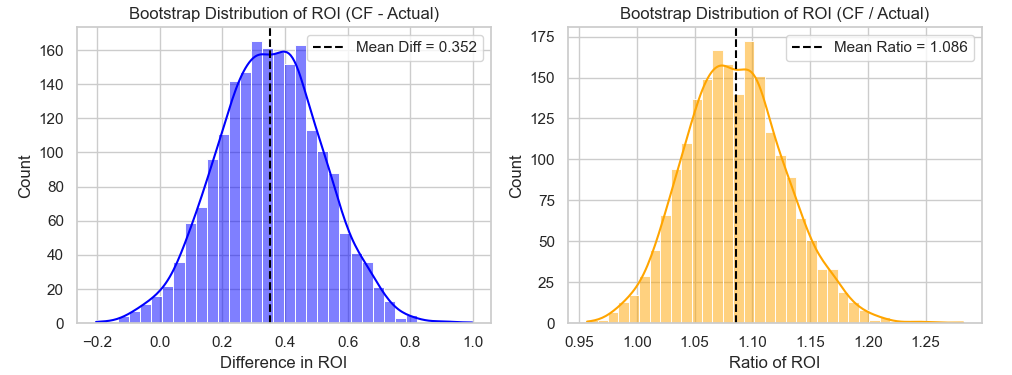
Evaluating the potential lift of how-casting.
Introduction In our previous blog post, we discussed how to move from simple forecasting to “how-casting” by using machine learning and optimization to decide the best allocation of marketing touchpoints across multiple territories and customer groups. Now that we have both a real-world plan (the Actual allocation implemented) and an optimized plan (the Optimal or
-

Beyond the Browser: Why an Executable Analytics App Can Offer a Unique Advantage
In the data-driven world, it’s common to see teams jump straight into web-based dashboards and portals. In it’s simplest form this could be a Tableau or PowerBI dashboard, and in more sophisticated and potentially high value projects it could be customized webapps with machine learning, causal inference, or other AI in the background. These have
-
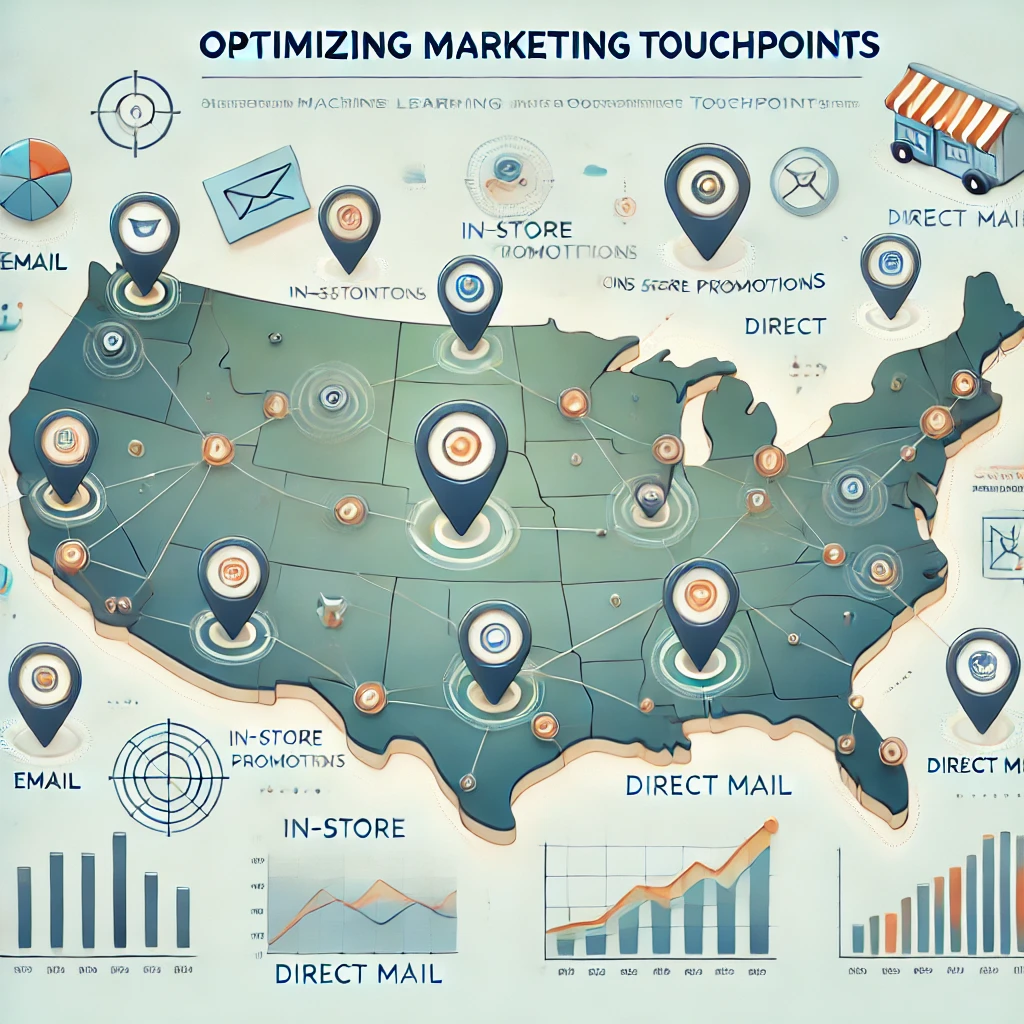
From Forecasting to How-Casting: Optimizing Multi-Territory Marketing with Machine Learning and Analytics
Imagine you’re in charge of a company that owns multiple retail franchises across different territories. Each franchise caters to local customers, and you need to decide how many “touchpoints” (such as email campaigns, in-store promotions, or direct mailers) to allocate to each customer segment. Too few, and you won’t see a lift in sales. Too
Blog Categories
- Analytics (3)
- Automation (1)
- Content (1)
- Data (1)
- Forecasting (3)
- Learning (2)
- Products (3)
- Sports Analytics (1)
- Time Series (3)
- Uncategorized (13)